
Views: 0 Author: Site Editor Publish Time: 2025-12-15 Origin: Site
Few accessories hold the same transformative power as a pair of diamond earrings. They possess an uncanny ability to elevate a casual outfit instantly or add the finishing touch of elegance to evening wear. Unlike a ring, which you can see on your own hand, earrings frame your face, illuminating your features and drawing the eye of everyone you meet. They are widely considered a wardrobe staple, yet purchasing them often feels as complex as buying a car.
The sheer variety of styles, cuts, and metals can be overwhelming. Should you prioritize size over clarity? Is platinum worth the extra cost over white gold? How do you know which style suits your face shape best?
Whether you are treating yourself to a well-deserved gift or shopping for a loved one, understanding the nuances of these gemstones is essential. This guide breaks down everything you need to know about buying diamond earrings so you can make a purchase that sparkles for a lifetime.
Before worrying about technical specifications, you must decide on the style. The "right" style depends heavily on lifestyle, personal taste, and how frequently the earrings will be worn.
When people think of diamond earrings, they usually picture studs. They are the definition of versatility. Solitaire studs consist of a single diamond mounted on a post. They sit directly on the earlobe, offering a floating appearance. Because they are simple and understated, studs are perfect for daily wear. You can wear them to the gym, the office, or a black-tie gala without them ever looking out of place.
For those who prefer a bit more presence, hoops are an excellent choice. Diamond hoops can range from small, discreet circles to large, dramatic loops encrusted with stones. A popular variation is the "inside-out" hoop, where diamonds are set on the front outer edge and the back inner edge, ensuring sparkle is visible from every angle.
"Huggies" are a smaller subtype of hoops. As the name suggests, they "hug" the earlobe closely. They offer the row-of-diamonds look of a hoop but with the practicality and comfort of a stud.
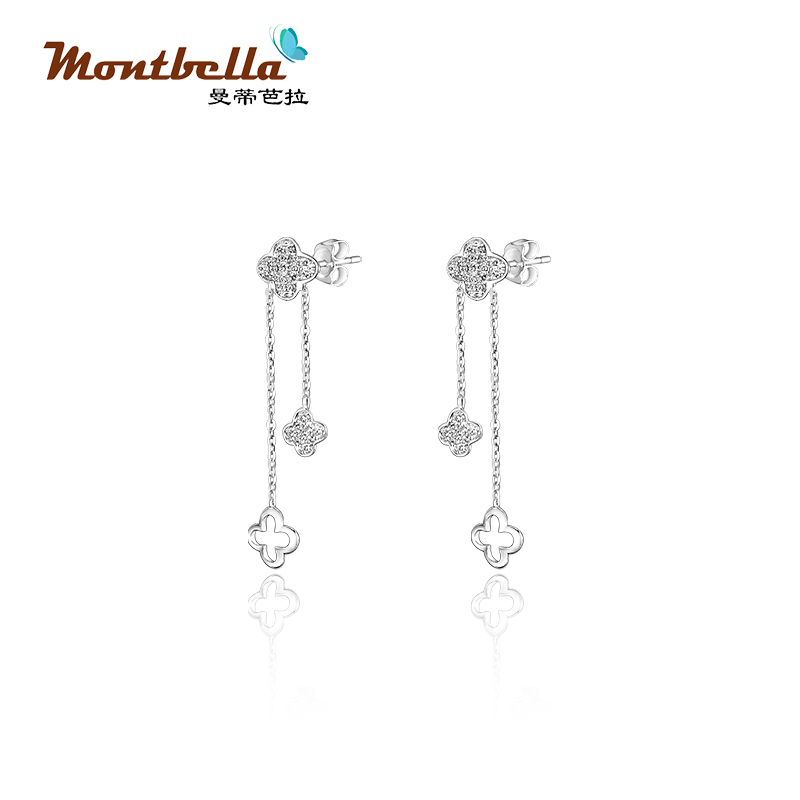
If the goal is to create movement and catch the light, drop earrings are the answer. These hang below the earlobe and often feature a diamond solitaire that dangles from a metal setting or a line of smaller pavé diamonds. They are generally considered more formal than studs, making them ideal for weddings, anniversaries, and special events.
You may have heard of the 4Cs (Cut, Color, Clarity, and Carat) regarding engagement rings. While these factors still matter for earrings, the priorities shift slightly. Since earrings are viewed from a distance—usually a foot or more away—you can often compromise on certain "Cs" to maximize your budget without sacrificing beauty.
Never compromise on cut. The cut determines how well the diamond reflects light. A poorly cut diamond will look dull and lifeless, no matter how big it is. For earrings, you want maximum brilliance and fire. A "Very Good" or "Excellent" cut grade ensures the stones sparkle noticeably, even from across the room.
Diamonds are graded on a color scale from D (colorless) to Z (light yellow). For rings, many buyers strive for the D-F range. However, for diamond earrings, you can easily drop to the G-H or even I-J range. Once set in metal (especially yellow gold), the slight color difference is imperceptible to the naked eye, allowing you to save significantly.
Clarity refers to the presence of internal inclusions or external blemishes. Because earrings are not scrutinized under a magnifying loupe by strangers, you do not need a "Flawless" grade. Look for diamonds that are "eye-clean," meaning inclusions aren't visible to the naked eye. In the SI1 or SI2 (Slightly Included) range, you can find excellent value.
Carat weight measures the size of the diamond. Keep in mind that earring carat weight is usually listed as "Total Carat Weight" (TCW). This means a 1.00-carat pair of studs consists of two 0.50-carat diamonds. Because you can save money on color and clarity, you might be able to allocate more of your budget toward a larger carat weight, giving the earrings more impact.
The metal setting does more than just hold the gemstone in place; it influences the overall look and durability of the piece.
· Platinum: The most durable and hypoallergenic choice. It is naturally white and won't fade, making it an excellent pairing for high-quality colorless diamonds. However, it is also the heaviest and most expensive option.
· White Gold: A very popular choice that mimics the look of platinum at a lower price point. It provides a sleek, modern aesthetic that enhances the whiteness of the diamonds.
· Yellow Gold: The traditional choice. The warm tones of yellow gold create a beautiful contrast with the diamonds. It is also more forgiving of diamonds with a lower color grade, as the yellow metal masks slight yellow tints in the stone.
· Rose Gold: For a romantic, vintage, or trendy look, rose gold is a strong contender. It is durable (due to the copper alloy) and flattering on many skin tones.
Just as specific haircuts flatter certain face shapes, specific earring styles can balance your features.
· Round Face: To elongate the face, opt for drop earrings or long dangles. Avoid large circular hoops or button studs, which can emphasize roundness.
· Oval Face: This is considered the most versatile shape. Studs, hoops, and huggies all look fantastic.
· Square Face: To soften the angles of the jawline, choose earrings with rounded designs. Large hoops or round studs work well here. Avoid square or rectangular shapes.
· Heart-Shaped Face: Look for earrings that are wider at the bottom than the top, such as teardrop styles or chandelier earrings. This helps balance a narrower chin.
Diamond earrings vary wildly in price. Having a clear budget before you shop helps narrow down your options. The following table provides a general estimation of what you might expect at different price points, though market fluctuations and brand premiums will always apply.
Budget Range | Typical Total Carat Weight (TCW) | Metal Setting | Expected Diamond Quality |
$250 - $500 | 0.10 ct - 0.25 ct | 10k or 14k Gold | Commercial grade (I1-I2 clarity, I-J color) |
$500 - $1,000 | 0.25 ct - 0.50 ct | 14k Gold | Good commercial grade (SI2-I1 clarity, H-I color) |
$1,000 - $2,500 | 0.50 ct - 1.00 ct | 14k or 18k Gold | Fine quality (SI1-SI2 clarity, G-H color) |
$2,500 - $5,000 | 1.00 ct - 1.50 ct | 18k Gold or Platinum | High quality (VS2-SI1 clarity, F-G color) |
$5,000+ | 1.50 ct+ | Platinum | Premium quality (VS1+ clarity, D-F color) |
One often overlooked detail is the earring back. You do not want to lose a significant investment because of a loose clasp.
Push backs (or butterfly backs) are the most common. They are easy to use but can loosen over time. Screw backs offer high security as the back literally screws onto the post, making it nearly impossible for the earring to fall off. However, they can be finicky to put on if you are in a rush. For heavier earrings or drops, lever backs are excellent; they enclose the hook and snap shut, providing comfort and security.
Diamonds are the hardest natural substance on Earth, but they can still get dirty. Lotions, hair products, and natural skin oils can create a film on the diamond, dulling its sparkle.
To keep your diamond earrings looking their best, soak them in a bowl of warm water mixed with a few drops of mild dish soap. Use a soft-bristled toothbrush to gently scrub the stone, paying attention to the back where dirt accumulates. Rinse thoroughly and dry with a lint-free cloth.
When you aren't wearing them, store your earrings in a soft fabric pouch or a jewelry box with separate compartments. Diamonds can scratch other metals and gemstones, so keeping them isolated is the safest practice.
Buying diamond earrings is a balance of art and science. By prioritizing a high-quality cut and choosing a carat size that fits your budget, you can find a pair that lights up the room. Whether you choose timeless studs or dramatic drops, the right pair of earrings is more than just jewelry—it is an heirloom in the making.


