
Views: 0 Author: Site Editor Publish Time: 2025-11-26 Origin: Site
A gold diamond necklace is more than just an accessory; it's a timeless statement piece, a cherished gift, and often a significant investment. Whether you're marking a special occasion or simply treating yourself, selecting the right necklace requires a bit of knowledge. From understanding the nuances of gold to evaluating the sparkle of a diamond, there are several factors to consider.
This guide is designed to walk you through everything you need to know. We’ll explore the different types of gold, break down the essential qualities of a diamond, and compare popular necklace styles. By the end, you'll feel confident in your ability to choose a beautiful gold diamond necklace that you or a loved one will treasure for years to come.
Before you can choose your necklace, it's important to understand the metal that will hold your diamond. Gold is the classic choice for fine jewelry, prized for its luster, rarity, and durability. However, not all gold is the same. The primary differences come down to purity (karats) and color.
The purity of gold is measured in karats (k). Pure gold is 24k, which is extremely soft and not practical for everyday jewelry. To increase its strength and durability, gold is mixed with other metals like copper, silver, and zinc to create an alloy.
Here's a quick breakdown of the most common gold purities you'll encounter:
Karat | Pure Gold Percentage | Characteristics |
|---|---|---|
24k | 99.9% | Very soft, rich yellow color. Rarely used for necklaces. |
18k | 75% | Excellent balance of purity and strength. Vibrant color. |
14k | 58.3% | The most popular choice in the U.S. Durable and affordable. |
10k | 41.7% | Very durable, less vibrant color. The most affordable option. |
For a gold diamond necklace, 14k or 18k gold is generally recommended. These options provide enough durability to securely hold the diamond while offering a beautiful, rich color that complements the stone's brilliance.
The metals mixed with pure gold not only add strength but also determine the final color of the jewelry piece. Each color offers a distinct aesthetic.
★Yellow Gold: This is the most traditional color, achieved by mixing pure gold with copper and silver. It has a warm, classic look that beautifully contrasts with the bright sparkle of a diamond.
★White Gold: To create white gold, pure gold is alloyed with white metals like palladium, nickel, and zinc. It is then often plated with rhodium for a brilliant, silvery-white finish that enhances the diamond's colorless appearance.
★Rose Gold: This romantic, pinkish hue is created by increasing the copper content in the alloy. Rose gold has become incredibly popular for its warm, vintage-inspired feel that complements all skin tones.
The choice of color is entirely a matter of personal preference and style. Consider the recipient's existing jewelry collection and skin tone when making your decision.
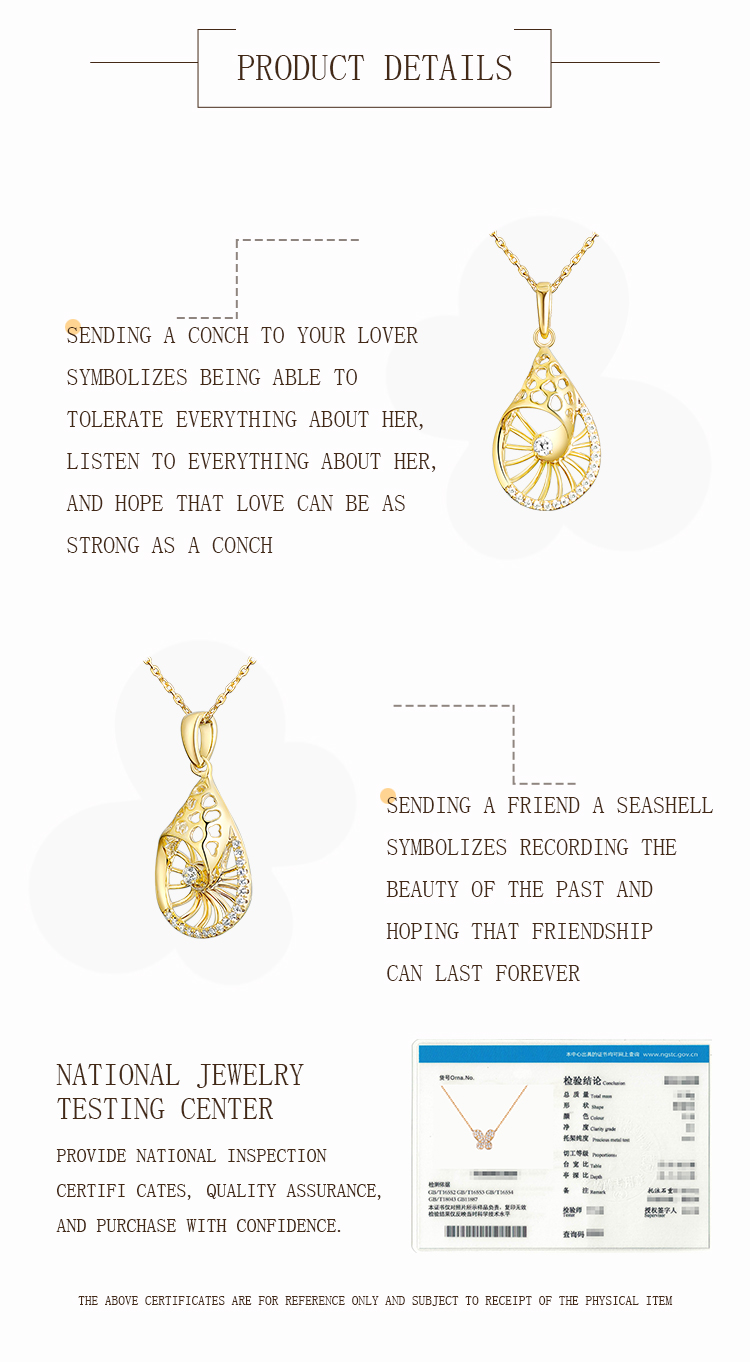
The diamond is the star of the show. Its quality and beauty are universally graded using a system known as the "4 Cs": Cut, Color, Clarity, and Carat. Understanding these four factors is crucial for selecting a high-quality diamond that fits your budget.
The cut is arguably the most important of the 4 Cs. It doesn’t refer to the diamond's shape (like round or pear) but to the quality of its facets, symmetry, and proportions. A well-cut diamond will reflect and refract light to create maximum sparkle and brilliance. A poorly cut diamond, regardless of its color or clarity, will appear dull. Diamond cut grades typically range from Excellent to Poor. For a necklace, aim for a cut grade of Very Good or Excellent to ensure your diamond shines brightly.
Diamond color is graded on a scale from D (colorless) to Z (light yellow or brown). Truly colorless diamonds (D-F) are the rarest and most valuable. For a gold diamond necklace, you have some flexibility.
★For white gold settings: A diamond in the D-H range is ideal, as the white setting will highlight any hint of color.
★For yellow or rose gold settings: You can opt for a diamond in the I-K range. The warm tones of the gold will make a slight yellow tint in the diamond less noticeable, allowing you to save money without compromising on beauty.
Clarity refers to the absence of internal flaws (inclusions) and external blemishes. The clarity scale ranges from Flawless (FL) to Included (I). Most diamonds have tiny imperfections that are not visible to the naked eye. For a necklace, a diamond in the VS1-SI2 range is often considered the sweet spot. These diamonds are "eye-clean," meaning their inclusions are not visible without magnification, offering excellent value for your money.
Carat is the measurement of a diamond's weight, not its size. However, a higher carat weight generally means a larger-looking diamond. While it can be tempting to prioritize carat weight, remember that the other 3 Cs have a much greater impact on a diamond's overall beauty. A smaller, well-cut diamond with good color and clarity will sparkle more and look more stunning than a larger diamond of lower quality.
Once you have an idea of your preferred gold and diamond quality, it's time to choose a style. Three styles dominate the world of diamond necklaces: the solitaire, the halo, and the three-stone.
★Solitaire Pendant: This is the most classic and popular style. It features a single diamond suspended from a chain. Its minimalist design puts all the focus on the diamond's brilliance, making it a timeless and versatile choice for any occasion.
★Halo Pendant: The halo setting features a center diamond surrounded by a "halo" of smaller pavé diamonds. This design creates a stunning visual effect, making the center stone appear larger and adding extra sparkle. It's a glamorous choice for those who want to maximize impact.
★Three-Stone Pendant: Representing the past, present, and future, the three-stone necklace is a deeply symbolic choice. It features three diamonds set in a row, often with the center stone being slightly larger. This style offers a unique and meaningful alternative to the traditional solitaire.
Choosing a gold diamond necklace is a personal journey that blends knowledge with individual taste. By understanding the fundamentals of gold and the 4 Cs of diamonds, you can confidently navigate the options and select a piece that truly resonates. Remember to balance the different quality factors to find the best possible necklace within your budget. Whether you opt for a classic solitaire in yellow gold or a dazzling halo in rose gold, the right necklace will be a source of joy and elegance for a lifetime.


