
Views: 0 Author: Site Editor Publish Time: 2025-11-21 Origin: Site
Finding a beautiful piece of jewelry at a flea market or inheriting a family heirloom can feel like discovering treasure. But how can you tell if that sparkling brooch or elegant ring is a genuine antique? Distinguishing antique jewelry from vintage or modern reproductions requires a keen eye and a bit of knowledge.
This guide will walk you through the essential steps to identify antique jewelry. You will learn about the different jewelry eras, what materials and construction techniques to look for, and how to spot the tell-tale marks that reveal a piece's history. By the end, you'll be better equipped to appreciate the story behind these timeless treasures.
Before you can identify it, it helps to know the official definition. For a piece of jewelry to be considered an antique, it must be at least 100 years old.
Anything between 20 and 99 years old is typically classified as vintage. Jewelry made within the last 20 years is considered modern or contemporary. Understanding these distinctions is the first step in correctly dating a piece.
Sometimes, you'll also hear the term "estate jewelry." This is simply a catch-all term for any jewelry that has been previously owned. An estate piece could be antique, vintage, or even modern.
Category | Age | Description |
|---|---|---|
Antique | 100+ years old | Pieces made before the early 1920s. |
Vintage | 20-99 years old | Pieces made between the 1920s and the early 2000s. |
Modern | Less than 20 years old | Contemporary pieces made in recent years. |
Knowing the key characteristics of different historical periods is one of the most effective ways to identify antique jewelry. Each era had its own distinct style, preferred materials, and popular motifs.
Jewelry from the Georgian period is extremely rare and highly valued. Pieces were often handmade, resulting in unique and sometimes imperfect creations.
Motifs: Nature was a dominant theme, with designs featuring flowers, birds, and leaves. "Memento mori" jewelry, which served as a reminder of mortality, was also popular and often included motifs like skulls and coffins.
Materials: Jewelers frequently used high-karat gold and silver. Since platinum wasn't yet used, silver was often backed with gold to prevent tarnishing on skin and clothing.
Gemstones: Rose-cut and old mine-cut diamonds were common. Gemstones were often set in closed-back settings, sometimes with a piece of foil placed behind the stone to enhance its brilliance. Garnets, topaz, and precious sapphires were also used.
The Victorian era, named after Queen Victoria's long reign, is split into three distinct periods: Early (Romantic), Mid (Grand), and Late (Aesthetic).
Romantic Period (1837-1860): Inspired by the Queen's love for Prince Albert, jewelry from this time was sentimental and symbolic. Designs featured hearts, anchors (for hope), and snakes (for eternal love).
Grand Period (1861-1880): Following Prince Albert's death, mourning jewelry became fashionable. These pieces were often somber and heavy, made from materials like jet, onyx, and vulcanite.
Aesthetic Period (1880-1901): As the mourning period ended, jewelry became lighter and more whimsical. Motifs like stars, crescents, and insects were popular, and the discovery of diamond mines in South Africa made diamonds more accessible.
Overlapping with the end of the Victorian era, Art Nouveau was a short-lived but highly influential movement. It was a rebellion against the rigid industrial styles of the time, favoring flowing lines and natural forms.
Motifs: Designs were inspired by the natural world, featuring sensuous depictions of women with long, flowing hair, as well as insects like dragonflies and butterflies. Asymmetry and curving lines were hallmarks of this style.
Materials: Enameling, particularly techniques like plique-à-jour (which creates a stained-glass effect), was a signature of the era. Horn and ivory were also used alongside gold and silver.
Gemstones: Opals, moonstones, and pearls were favored for their subtle shimmer over the sparkle of diamonds.
Also known as "La Belle Époque," the Edwardian era was a time of elegance and sophistication. The style is light, delicate, and often monochromatic.
Motifs: Designs were intricate and graceful, featuring garlands, bows, tassels, and lace-like patterns.
Materials: Platinum became the metal of choice, as its strength allowed for delicate, openwork designs called filigree.
Gemstones: Diamonds were front and center, often paired with pearls and set in milgrain settings (tiny beads of metal lining the stone).
The Art Deco period, which began just as the 100-year antique mark now starts, was a celebration of modernity and industry. Designs were bold, geometric, and symmetrical.
Motifs: Strong geometric shapes like triangles, squares, and circles dominated. Designs were influenced by Cubism and the aesthetics of machines.
Materials: Platinum remained popular, but white gold was also widely used as a more affordable alternative.
Gemstones: Diamonds were often accented with brightly colored gemstones like emeralds, sapphires, and rubies to create sharp, dramatic contrasts. Calibré-cut stones (custom-cut to fit a design) were a key feature.
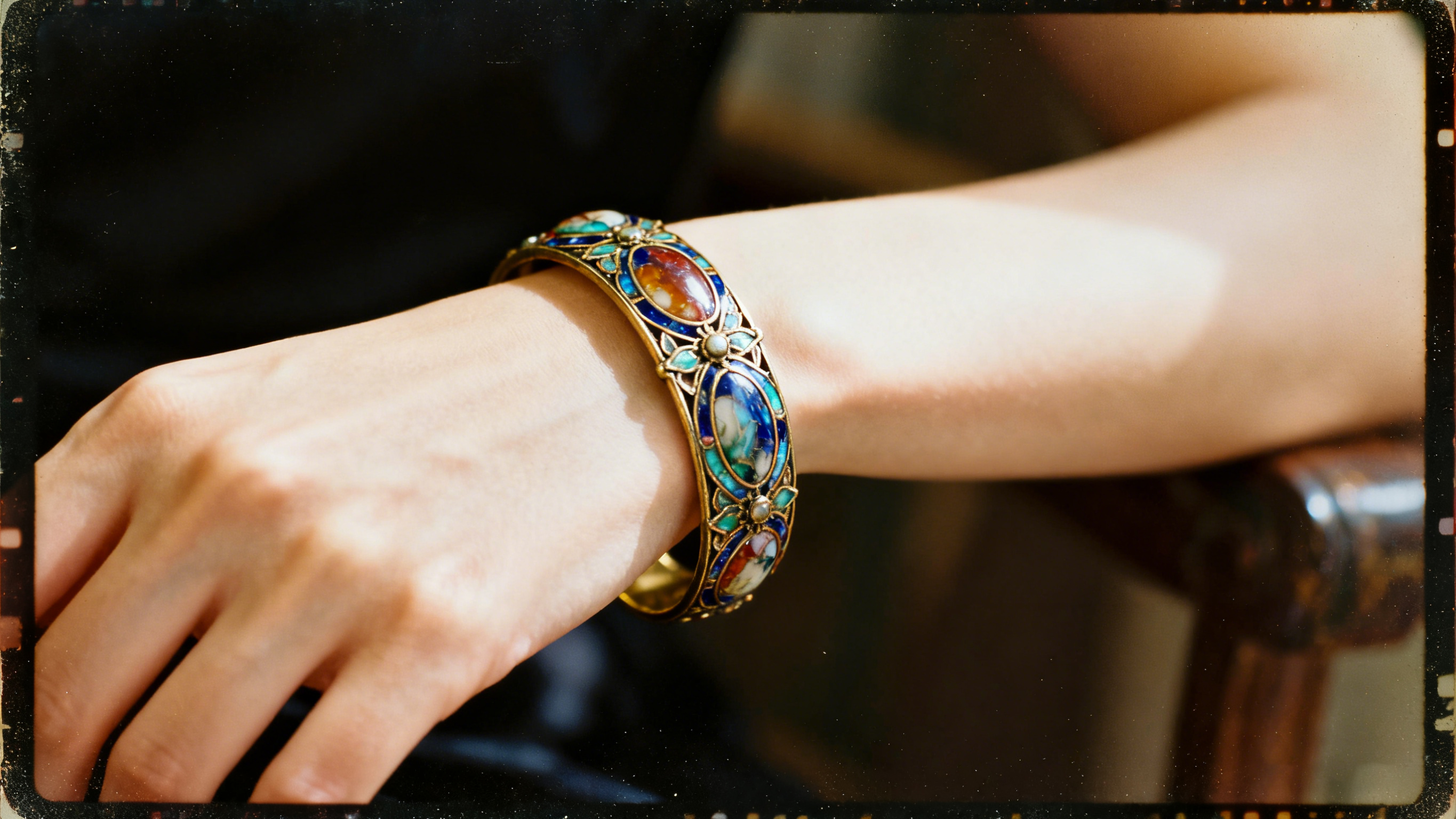
The way a piece of jewelry is made can tell you a lot about its age. Modern manufacturing techniques are very different from the methods used by artisans a century ago.
Antique jewelry was made by hand. Look for small imperfections that signal human touch, such as:
Slight asymmetry in the design.
Tool marks that aren't perfectly uniform.
Prongs that are individually shaped rather than mass-produced.
Metals: As mentioned, platinum wasn't widely used in jewelry until the early 20th century. If a piece looks older but is made of platinum, it's likely from the Edwardian era or later. The use of white gold became common in the Art Deco period.
Gemstone Cuts: Diamond cutting techniques have evolved significantly. Antique diamonds, like the rose cut or old mine cut, have fewer facets and a softer sparkle than the modern brilliant cut. They were also cut by hand, so their shapes are often slightly irregular.
One of the surest ways to identify an antique is by its markings. These small stamps, usually found on the back or inside of a piece, can reveal the maker, the metal content, and sometimes even the year it was made.
Hallmarks: These official marks indicate the purity of the metal (e.g., "18K" or "750" for 18-karat gold). Different countries have their own unique hallmark systems.
Maker's Marks: These are the signature or logo of the jeweler or company that created the piece. Researching this mark can help you pinpoint the manufacturer and the period they were active.
Patent Marks: Sometimes, a piece will have a patent number, which can be looked up to find the exact date the patent was issued.
You will likely need a jeweler's loupe or a good magnifying glass to read these tiny inscriptions.
An antique piece of jewelry will naturally show some signs of age. Look for a soft patina on the metal—a gentle sheen that develops over time and is difficult to replicate. While damage can devalue a piece, a certain amount of wear can be a sign of authenticity.
Be wary of pieces that look too new. If an "antique" ring shows no signs of wear and has perfectly polished, modern-cut diamonds, it may be a reproduction.
Identifying antique jewelry is a skill that blends historical knowledge with careful observation. By examining the style, materials, construction, and markings, you can begin to uncover the rich history hidden within each piece. Remember that each detail, from the cut of a stone to the curve of a design, tells a part of the story.
If you're ever uncertain, don't hesitate to consult a certified appraiser or a jeweler who specializes in antique pieces. Their expertise can provide you with a definitive identification and a deeper appreciation for your newfound treasure.


