
Views: 0 Author: Site Editor Publish Time: 2025-11-24 Origin: Site
An 18k gold diamond necklace is more than just an accessory; it's a statement of elegance and a timeless investment. Combining the rich luster of high-karat gold with the unmatched sparkle of diamonds, these pieces are coveted for their beauty and durability. Whether you're marking a special occasion or treating yourself to a piece of everyday luxury, understanding what makes an 18k gold diamond necklace special is the first step toward making a purchase you'll cherish for a lifetime.
This guide will walk you through everything you need to know about 18k gold diamond necklaces. We'll explore the unique properties of 18k gold, explain the essential qualities of diamonds, and provide tips on selecting the perfect piece for your style and budget. By the end, you'll have the confidence to choose a necklace that not only looks stunning but also holds its value and beauty for years to come.
When you see "18k" on a piece of jewelry, it refers to the purity of the gold. Pure gold, which is 24 karats, is too soft for everyday wear. To increase its strength and durability, it's mixed with other metals like copper, silver, and zinc to create an alloy. The "18k" stamp means the item is made of 18 parts pure gold and 6 parts other metals. This composition translates to 75% pure gold.
This 75% gold content gives 18k gold a rich, deep color that is highly sought after. It offers a perfect balance between the pure, vibrant yellow of 24k gold and the durability needed for jewelry that can be worn regularly.
Understanding the differences between common gold karats can help you decide if 18k is the right choice for your diamond necklace.
Karat | Pure Gold Content | Characteristics | Ideal For |
|---|---|---|---|
10k | 41.7% | Very durable, less vibrant yellow color, most affordable. | Everyday jewelry that endures a lot of wear and tear. |
14k | 58.3% | Good balance of durability, color, and affordability. | Engagement rings, everyday necklaces, and bracelets. |
18k | 75.0% | Rich, vibrant color, durable enough for regular wear. | Fine jewelry like diamond necklaces and special occasion pieces. |
24k | 99.9% | Deepest yellow color, very soft, scratches easily. | Investment gold (coins, bars) or very delicate jewelry. |
For a diamond necklace, 18k gold is an excellent choice because its luxurious color enhances the brilliance of the diamonds without being too soft for daily wear.
The metals mixed with pure gold determine the final color of the alloy. This allows for a beautiful range of options for your necklace.
★18k Yellow Gold: This is the classic choice, created by mixing pure gold with copper and silver. Its warm, sunny hue is timeless and complements diamonds beautifully, creating a look of traditional elegance.
★18k White Gold: To achieve a silvery-white finish, pure gold is alloyed with white metals like palladium, silver, or nickel. It's then often coated with rhodium for extra shine and durability. White gold offers a modern, sleek alternative to yellow gold and makes diamonds appear even brighter.
★18k Rose Gold: This romantic, pinkish hue is created by adding more copper to the gold alloy. Rose gold has a warm, vintage feel and has become increasingly popular for its unique and flattering tone against many skin types.
The quality and value of a diamond are determined by four key factors known as the "4 Cs": Cut, Color, Clarity, and Carat weight. When these elements come together in harmony, they create the dazzling sparkle that makes diamonds so captivating.
Often considered the most important of the 4 Cs, the cut refers to how well a diamond’s facets interact with light. It’s not about the shape (like round, princess, or oval) but about the symmetry, proportioning, and polish of the diamond. A well-cut diamond will capture light and reflect it back, creating brilliant sparkle and fire. A poorly cut diamond, on the other hand, will appear dull and lifeless, regardless of its color or clarity.
Diamond color is graded on a scale from D (colorless) to Z (light yellow or brown). For a classic diamond necklace, you'll want a stone that appears white to the naked eye.
Color Grade | Description | Appearance |
|---|---|---|
D-F | Colorless | The highest quality and rarest; completely free of color. |
G-J | Near Colorless | Color is difficult to detect unless compared to a colorless stone. |
K-M | Faint Yellow | A slight warmth or yellow tint is visible to the naked eye. |
For an 18k yellow gold setting, you can often choose a diamond in the G-J range, as the warm tone of the gold will mask any slight yellow in the diamond. For white gold, a diamond in the D-F range is preferable to ensure a bright, icy look.
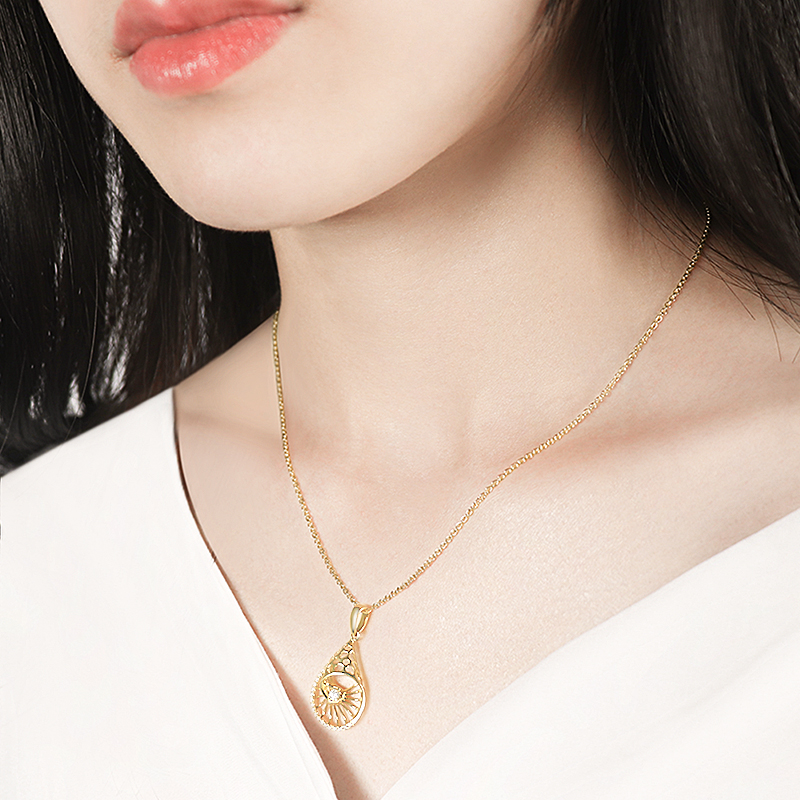
Clarity measures the presence of internal flaws (inclusions) and external blemishes. The clarity scale ranges from Flawless (FL) to Included (I). Most imperfections are microscopic and don't affect the diamond's beauty.
Clarity Grade | Description | Visibility of Flaws |
|---|---|---|
FL, IF | Flawless, Internally Flawless | No inclusions or blemishes visible under 10x magnification. |
VVS1, VVS2 | Very, Very Slightly Included | Inclusions are extremely difficult to see under 10x magnification. |
VS1, VS2 | Very Slightly Included | Minor inclusions are visible with effort under 10x magnification. |
SI1, SI2 | Slightly Included | Inclusions are noticeable under 10x magnification. |
For a necklace, diamonds in the VS or SI range often provide the best value, as any minor inclusions are typically not visible to the naked eye.
Carat refers to the diamond's weight, not its size. One carat equals 200 milligrams. While a higher carat weight generally means a larger diamond, the cut can also influence its perceived size. For example, a well-cut 1.0-carat diamond might appear larger than a poorly cut 1.1-carat diamond.
With a solid understanding of gold and diamonds, you can now explore the different styles of 18k gold diamond necklaces.
The most classic style, a pendant necklace features a single diamond or a cluster of diamonds suspended from a chain.
★Solitaire Pendant: A single diamond takes center stage. This timeless design is perfect for everyday wear and special occasions alike.
★Halo Pendant: A central diamond is surrounded by a "halo" of smaller diamonds. This popular style makes the center stone appear larger and adds extra sparkle.
Also known as "diamonds by the yard," this style features diamonds set at regular intervals along the chain. It offers a delicate, modern look that is perfect for layering with other necklaces.
For a true statement piece, a tennis necklace features a continuous line of diamonds encircling the neck. This is a luxurious and glamorous option, ideal for formal events or as a significant milestone gift.
An 18k gold diamond necklace is a significant purchase, but it's one that carries deep meaning and lasting value. By understanding the qualities of 18k gold and the 4 Cs of diamonds, you can confidently select a piece that reflects your personal style and meets your standards for quality.
Whether you opt for a classic solitaire pendant, a sparkling halo, or a modern station necklace, you are investing in a piece of art that will be treasured for generations. Take your time, explore your options, and choose the necklace that speaks to you.


